
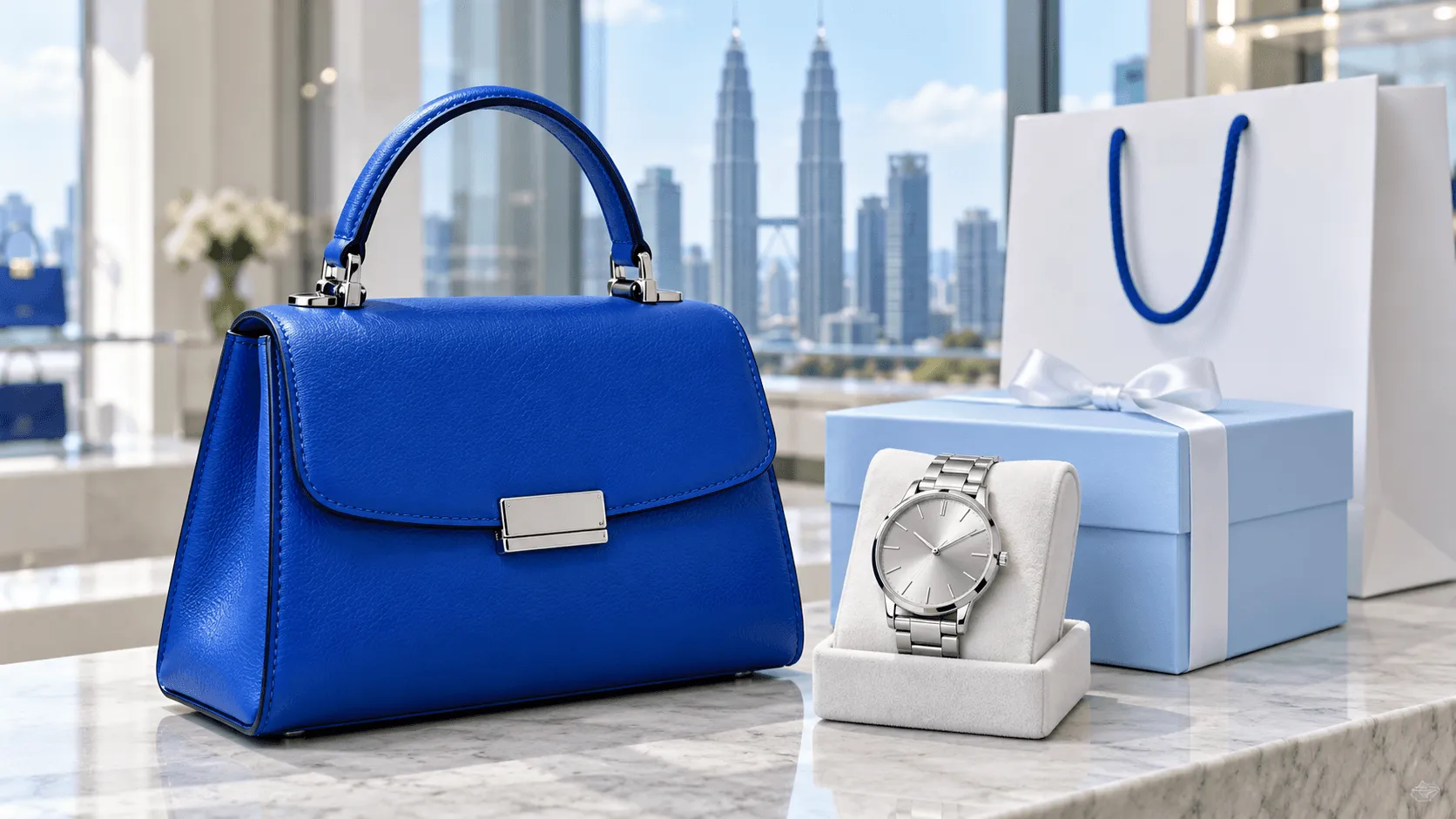
For almost two years, anyone shopping for a watch, a handbag, or a new car heard the same warning: a dedicated luxury goods tax was coming. Then, in July 2025, the government quietly walked the whole plan back. No standalone tax. No separate line item at checkout. If you assumed that meant luxury shopping got cheaper, it didn't – the tax simply moved house and stopped announcing itself. Here's what buyers are actually paying in 2026, category by category, and where people still get caught out.
Where the Luxury Tax Idea Actually Went
The High-Value Goods Tax, first floated under the revised 2023 Budget, was supposed to take effect on 1 May 2024 with rates between 5% and 10% on items like watches above RM20,000, jewellery above RM10,000, and cars above RM200,000. It kept getting pushed back – jewellers in particular argued the threshold would hit mid-market retailers, not just the ultra-wealthy – and in a written parliamentary reply on 29 July 2025, the Ministry of Finance confirmed it wasn't going ahead as a standalone law at all.
What happened instead is less dramatic but arguably more important for your wallet: the same 5%–10% rates were folded straight into the expanded Sales and Service Tax (SST) framework, effective from mid-2025. A tax consultant I spoke with last year put it well – it's less a cancellation and more a rebrand. The revenue target barely moved; the mechanism just became less visible. A few retailers I've seen quietly reprinted price tags around mid-2025 instead of adding a separate "luxury levy" line, which is arguably why so many shoppers still think the tax "never happened."
What's Actually Taxed, and at What Rate
Under the current sales tax structure, luxury and discretionary goods sit in either the 5% or 10% bracket depending on classification. High-end timepieces, fine jewellery, designer apparel, premium electronics, and imported alcohol are the categories that consistently land in the higher tier.
|
Category |
Current Sales Tax Rate |
Notes |
|
Watches & jewellery |
5%–10% |
Rate depends on classification and value tier |
|
Designer fashion, bags, footwear |
5%–10% |
Treated as discretionary goods |
|
Premium electronics |
5%–10% |
Includes flagship phones and high-end smartwatches |
|
Alcoholic beverages |
10% |
On top of existing excise duties |
One detail worth knowing: this is a single-stage tax. It's charged once – either when the item is manufactured locally or the moment it clears customs under the Royal Malaysian Customs Department's oversight – rather than being reapplied every time it changes hands down the supply chain. A jewellery retailer wouldn't pay SST again just for reselling a piece that already cleared it at import; the tax doesn't stack the further down the chain a product travels. That's a genuine improvement over a stacked-tax scenario, even if it doesn't feel that way when you're staring at the final price on the receipt.
What This Means for Businesses Selling the Goods
It isn't only shoppers who had to adjust. Retailers, importers, and distributors handling anything in the discretionary-goods bracket are expected to register for SST where applicable, reflect the correct rate on invoices, and keep pricing records that can hold up if customs asks how a valuation was reached. A boutique I know spent a chunk of 2025 re-training staff simply on which product lines now sit in the 5% bracket versus the 10% one – the classification isn't always obvious from the outside, and getting it wrong on an invoice is the retailer's problem, not the customer's.
For cross-border sellers, the obligation extends further: platforms shipping into the country are expected to account for the low-value goods tax at the point of sale rather than leaving it to customs to chase on arrival, which is part of why the RM500 threshold shows up as a line item on some overseas checkouts and not on others depending on how compliant the seller is.
Cars Do Their Own Kind of Math
Vehicles are where the numbers stop looking like a simple percentage and start looking like a formula. A premium car brought in from overseas gets layered with excise duty of up to 105%, depending almost entirely on engine capacity, an import duty calculated on an ad valorem basis somewhere between 2% and 60%, and then a flat 10% sales tax on top of both.
I've watched a friend go through this with a mid-size performance saloon he'd priced out abroad – the sticker price he'd budgeted for barely resembled what customs eventually assessed once excise and import duties compounded on each other before the sales tax was even applied. That compounding is the part people underestimate: each duty is calculated on a base that already includes the previous one, so the gap between "price overseas" and "price landed here" grows faster than a flat percentage would suggest.
"Ad valorem" simply means the import duty is charged as a percentage of the vehicle's assessed value rather than a fixed sum, and that value is set by customs, not by whatever invoice the buyer is holding. Larger-engine imports sit toward the top of both the excise and import duty bands, which is exactly why a two-litre-plus performance car from overseas rarely lands anywhere close to its home-market price once every layer – excise, import duty, then a flat 10% sales tax – has been applied in sequence.
Ordering From Overseas Splits Into Two Very Different Rules
Skipping the local shop for an international retailer doesn't get you around the tax – it just changes which rule applies, and the split happens at a fairly specific line: RM500.
|
Purchase type |
Threshold |
Tax treatment |
|
Low-value goods (LVG) |
RM500 or less |
Flat 10% sales tax charged at point of sale, regardless of platform |
|
High-value goods |
Above RM500 |
Standard import duty plus applicable sales tax, assessed at entry |
The LVG rule has been running since 1 January 2024 and it doesn't care whether you bought from a marketplace based in Guangzhou or a boutique site in Milan – cross a Malaysian ringgit threshold of RM500 and the 10% applies at checkout. Go over that line – a designer bag, a higher-end camera, a piece of jewellery – and you're now dealing with import duty and sales tax assessed by customs when the parcel actually lands, which is a slower, occasionally more expensive process than most first-time overseas shoppers expect.
Where Buyers Still Get It Wrong
- Assuming tourists are exempt. Early HVGT drafts floated a tourist carve-out; the current sales-tax-based system carries no such exemption, so visitors pay the same embedded rate as residents.
- Expecting a separate line item. Because the tax is folded into standard SST rather than itemised as a "luxury charge," most receipts won't show it at all – it's already inside the shelf price.
- Ignoring the exchange rate on top of the duties. If you're paying a foreign card or transferring funds to settle customs charges, the markup your bank applies to the conversion can quietly add another percentage point or two before duties even factor in.
- Assuming secondhand items are treated differently. Classification depends on the goods and their declared value, not on whether the item is new – a pre-owned watch above the relevant threshold is assessed the same as a new one.
None of this makes luxury shopping impossible, and the single-stage structure is genuinely simpler than the multi-tier tax some other countries run. But the practical lesson from 2025's back-and-forth is that a policy being "scrapped" in the headlines doesn't mean the cost disappeared – it usually means the cost got absorbed somewhere less obvious. Whether you're eyeing a watch, financing a car, or importing something specific from abroad, it's worth pricing the tax in from the start rather than discovering it at the till.