
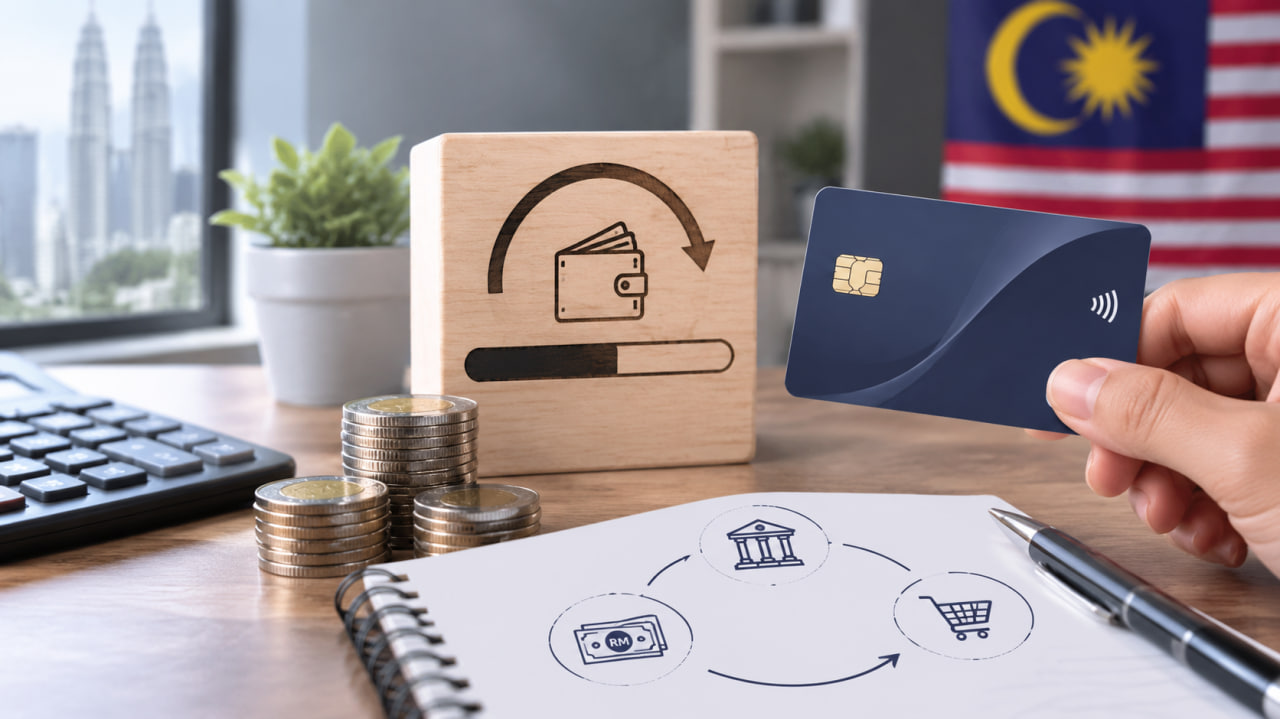
A line of credit gives you access to an approved borrowing limit without requiring you to take the entire amount at once. You draw only what you need, repay the outstanding balance and, if the facility is revolving, use the available limit again. This makes it different from a personal loan, where the lender normally disburses one lump sum and you repay it over a fixed schedule.
In Malaysia, similar facilities may be described as an overdraft, revolving credit, cash line, flexi facility or working-capital line. Product names differ between banks, and the legal and pricing terms in the product disclosure sheet matter more than the marketing label.
What a Line of Credit Is
A credit line is a borrowing arrangement with a maximum approved limit. For example, a bank may approve RM50,000, but you may initially use only RM8,000. Interest or profit is generally calculated on the utilised amount rather than the full credit limit, although some products may also impose a commitment fee on the unused portion.
The facility is usually connected to a current account or a dedicated financing account. Depending on the product, funds may be accessed by account transfer, cheque, debit instruction or direct payment from the linked account.
How a Revolving Facility Works
- The bank assesses your income, cash flow, repayment history, existing debt and, where relevant, collateral.
- A credit limit is approved and documented in a letter of offer and product disclosure sheet.
- You draw funds up to the available limit.
- Interest or profit accrues on the outstanding balance according to the facility terms.
- Repayments restore available credit when the account is revolving.
A revolving line of credit can remain available while the account is active and in good standing. A non-revolving facility does not replenish in the same way: once an amount is repaid, that portion may no longer be available for another drawdown. Some overdraft facilities are also repayable on demand, which means the bank may require repayment under the conditions stated in the agreement.
Common Types of Credit Lines
- Personal line of credit: An individual borrowing facility that may be unsecured or supported by acceptable assets.
- Secured overdraft: A facility backed by collateral such as a fixed deposit, investment, property or another asset accepted by the bank.
- Business line of credit: Working-capital funding used for inventory, supplier payments, payroll gaps or short-term operating needs.
- Revolving credit facility: Funding that can be drawn, repaid and redrawn during the agreed availability period.
- Islamic cash line or revolving financing: A Shariah-compliant structure in which the applicable profit, fees and underlying contract are stated in the facility documents.
A secured line of credit normally presents less risk to the lender and may therefore offer a larger limit or lower pricing than an unsecured line of credit. The trade-off is material: if you fail to meet your obligations, the bank may enforce its rights against the pledged collateral.
How Interest and Fees Are Calculated
Retail floating-rate facilities may be priced using the Standardised Base Rate, or SBR, plus a bank-specific spread. Bank Negara Malaysia explains that the lending or financing rate is formed from the applicable benchmark rate and the spread stated by the financial institution. Because the benchmark can change, the effective rate and monthly cost may rise or fall during the facility period. Review the current BNM Reference Rate Framework before relying on an advertised rate.
For a simple illustration, assume you use RM20,000 for 30 days at an annual rate of 6.5%. A basic daily-interest estimate would be:
RM20,000 × 6.5% × 30 ÷ 365 = approximately RM106.85
This is only an illustration. Actual calculations may use the daily closing balance, different day-count conventions, monthly compounding or additional charges. A bank product disclosure sheet may include the following costs:
- interest or profit on the utilised amount;
- commitment fee on part of the unutilised limit;
- stamp duty and documentation charges;
- valuation, legal or security-registration costs;
- late-payment, excess-limit or default charges.
An official overdraft product disclosure sheet provides a practical example of daily pricing on the utilised portion, SBR-linked rate risk and charges that may apply. Treat any bank example as product-specific, not as a universal market rate.
Line of Credit vs Personal Loan vs Credit Card
|
Feature |
Line of credit |
Personal loan |
Credit card |
|
How funds are accessed |
Drawn when needed up to the approved limit |
Usually paid as one lump sum |
Used for card purchases, transfers or cash advances |
|
Reuse after repayment |
Usually yes if revolving |
No |
Yes while the account remains open |
|
Typical rate structure |
Often variable |
Fixed or variable, depending on product |
Usually stated as a card finance charge |
|
Best suited to |
Uncertain or recurring funding needs |
Known one-off cost with a repayment plan |
Purchases and short-term payment convenience |
|
Main risk |
Open-ended debt and rate changes |
Paying interest on the full disbursed amount |
High cost if balances are carried or cash advances are used |
Eligibility and Application Requirements
Approval is not automatic. Banks assess whether the requested credit line is affordable and appropriate. Requirements vary, but an applicant may need to provide:
- identity and residency documents;
- salary slips, tax forms or other proof of income;
- bank statements showing cash flow;
- business registration and management accounts for a business facility;
- documents proving ownership and value of proposed collateral.
Lenders may also review information reported through the Central Credit Reference Information System. CCRIS collects credit information from participating financial institutions and makes it available to those institutions for credit assessment. It is not simply a public “score”; the lender evaluates the report together with income, debt commitments, conduct of accounts and its own underwriting policy.
Benefits and Risks
|
Potential benefit |
Related risk or limitation |
|
Borrow only when funds are required |
Easy access can encourage repeated borrowing |
|
Pay financing cost mainly on the outstanding balance |
Fees may still apply to the unused limit or account |
|
Reusable funding for uneven cash flow |
The balance can remain outstanding for too long |
|
Secured options may reduce pricing |
Collateral may be liquidated after default |
|
Useful for short-term working capital |
A demand facility may be reduced or recalled under its terms |
The most important risk is not merely the advertised annual rate. It is the combination of variable pricing, fees, repayment flexibility and the possibility that the borrowed amount never falls. Minimum interest payments may keep an account current without materially reducing principal.
How to Compare Offers Responsibly
Do not compare facilities using the headline rate alone. Ask each bank for the latest product disclosure sheet and compare the same variables:
- approved limit and minimum drawdown;
- effective interest or profit rate and the reference-rate formula;
- whether interest is calculated daily and when it is debited;
- all commitment, transaction, excess-limit and late charges;
- security required and the lender’s enforcement rights;
- whether the facility is revolving, non-revolving or repayable on demand;
- conditions allowing the bank to reduce, suspend or cancel the limit.
Bank Negara Malaysia’s product transparency and disclosure standards are designed to help financial consumers receive key information about pricing, obligations and risks. Read the full contract as well as the summary sheet, because the letter of offer and general terms determine your legal obligations.
When a Credit Line Makes Sense
A line of credit can be suitable when the amount and timing of an expense are uncertain, but you have a credible plan to repay each drawdown. Examples include staged renovation costs, temporary business working-capital gaps or emergency liquidity where the alternative is more expensive.
It is usually a poor fit for routine lifestyle spending, long-term losses or a purchase with a known fixed price that can be financed more cheaply through a structured loan. Before applying, test the facility against a higher rate and a lower monthly income:
- Can you repay principal, not only interest?
- Would a 1–2 percentage-point rate increase remain affordable?
- Could you manage if the bank reduced or recalled the limit?
- Are you risking an essential asset as collateral?
- Is a fixed-term loan or existing savings a safer alternative?
If repayments are becoming difficult, contact the lender early. The Credit Counselling and Debt Management Agency (AKPK) provides financial education, counselling and debt-management support. Delaying action can increase charges and make future credit more difficult or expensive.
Bottom Line
A line of credit is useful because it matches borrowing to actual cash needs. Its flexibility, however, can conceal the true duration and cost of debt. The best facility is not necessarily the one with the largest credit limit; it is the one whose rate formula, fees, repayment conditions and collateral risk you fully understand and can afford under less favourable conditions.
This article provides general educational information and is not personal financial, legal or tax advice. Product availability and terms vary by institution and applicant.