
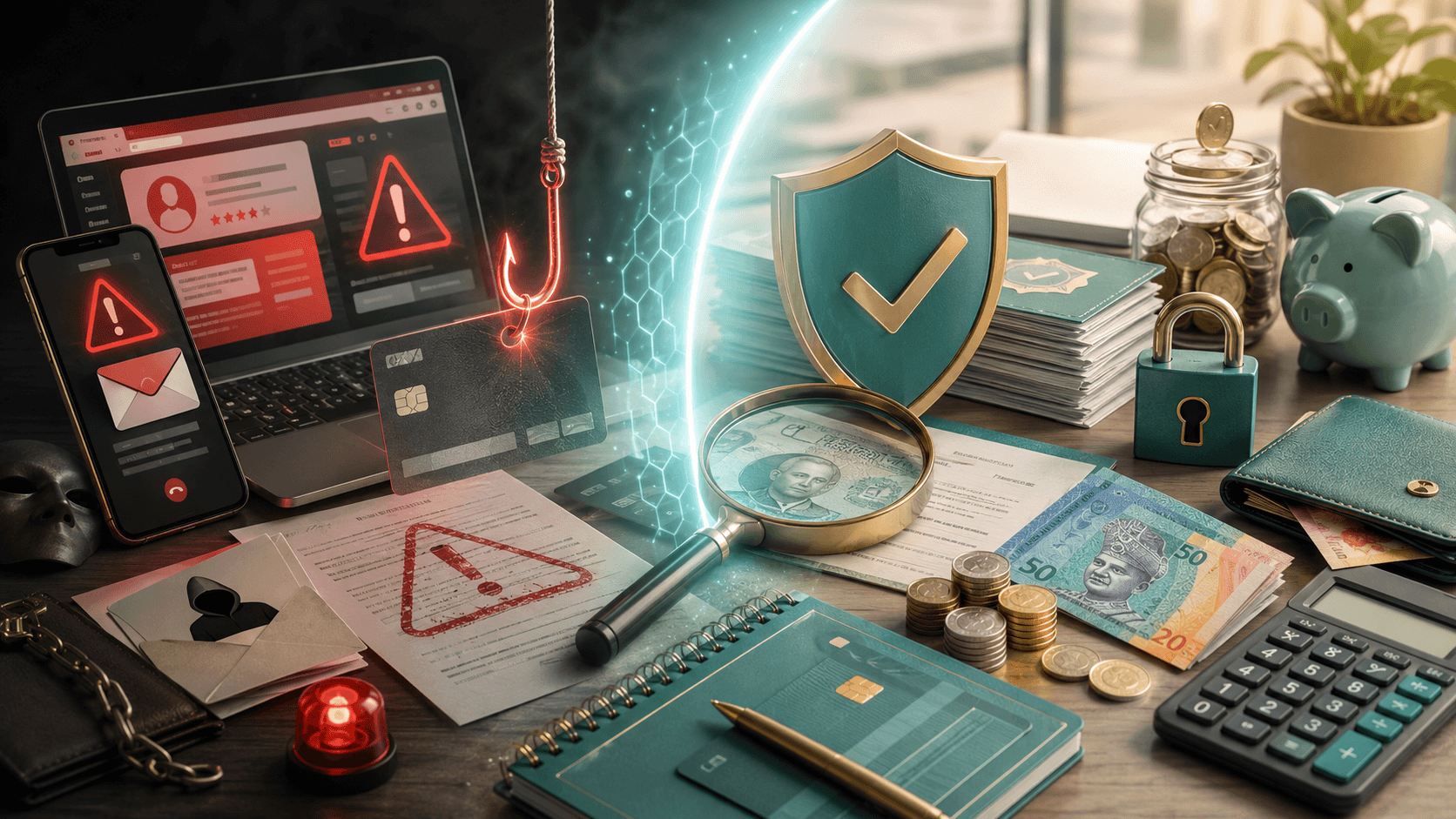
Penipuan pinjaman menyebabkan rakyat Malaysia kerugian ratusan juta ringgit setiap tahun. Menurut Senarai Amaran Pengguna Kewangan Bank Negara Malaysia (BNM), pemberi pinjaman tidak berlesen dan sindiket pinjaman palsu adalah antara jenayah kewangan yang paling kerap dilaporkan di negara ini. Taktik yang digunakan oleh penipu ini semakin meyakinkan — dan semakin berbahaya — dari tahun ke tahun.
Panduan ini menerangkan tanda-tanda amaran paling penting bagi penipuan pinjaman peribadi, kaedah canggih yang sedang digunakan oleh penipu pada masa ini, serta langkah tepat yang perlu diambil jika anda sudah menjadi sasaran. Semua sumber yang disebut dalam panduan ini adalah rasmi dan boleh disahkan.
Mengapa Penipuan Pinjaman Semakin Meningkat
Peminjam yang sukar mendapatkan pembiayaan bank tradisional merupakan sasaran utama. Jika rekod CCRIS atau CTOS anda kurang baik, anda mungkin lebih mudah tertarik kepada tawaran yang menjanjikan kelulusan terjamin atau syarat yang luar biasa longgar — dan penipu mengetahui perkara ini. Mereka merangka tawaran mereka khusus untuk menarik perhatian individu yang merasakan mereka tidak mempunyai banyak pilihan yang sah.
Sindiket penipuan juga menyamar sebagai syarikat sebenar yang berlesen, termasuk bank dan pemberi pinjam wang berdaftar. Hakikat bahawa sebuah laman web, akaun WhatsApp atau profil media sosial menggunakan nama jenama yang dikenali bukanlah jaminan bahawa ia sah. Sentiasa lakukan pengesahan secara bebas sebelum berkongsi sebarang maklumat peribadi atau membuat sebarang bayaran.
10 Tanda Amaran Penipuan Pinjaman Peribadi
Tiada satu petunjuk pun yang muktamad dengan sendirinya, tetapi semakin banyak tanda di bawah berlaku kepada pemberi pinjaman yang anda sedang pertimbangkan, semakin tinggi risiko bahawa anda sedang berurusan dengan penipu.
1. Anda diminta membayar yuran pendahuluan
Ini ialah tanda paling jelas bagi penipuan pinjaman. Tiada pemberi pinjaman berlesen yang sah di Malaysia akan meminta anda membayar apa-apa sebelum pinjaman anda dikeluarkan. Sebarang bayaran yang sah — seperti duti setem atau premium insurans — akan ditolak terus daripada jumlah pinjaman yang diluluskan, bukannya dikutip terlebih dahulu daripada anda.
Penipu menggunakan pelbagai istilah supaya bayaran ini kedengaran rasmi. Berhati-hati jika anda diminta membuat bayaran yang digambarkan sebagai mana-mana perkara berikut:
- Yuran pemprosesan atau yuran pentadbiran
- Deposit duti setem
- Premium insurans pinjaman
- Yuran pembersihan CCRIS atau CTOS
- Bayaran SST atau cukai
- Yuran pengaktifan akaun atau "pindahan ujian"
- Yuran mencari penjamin
- Bayaran rujukan Bank Negara Malaysia
- Yuran pemprosesan LHD atau pihak berkuasa kerajaan
- Yuran untuk "menghubungkan" akaun anda dengan sistem pemberi pinjaman
Jika sesiapa meminta anda membayar mana-mana perkara di atas sebelum menerima pinjaman, hentikan perbualan dengan segera.
2. Kelulusan dijamin tanpa mengira sejarah kredit anda
Pemberi pinjaman yang sah akan menilai kelayakan kredit anda sebelum membuat sebarang komitmen. Mereka akan menyemak pendapatan, sejarah pekerjaan, komitmen kewangan sedia ada, rekod CCRIS dan skor CTOS anda. Pemberi pinjaman yang menjanjikan kelulusan 100% atau "tiada semakan kredit diperlukan" berkemungkinan tidak berlesen atau sedang menjalankan penipuan. Janji sebegini direka untuk menarik individu yang telah ditolak di tempat lain.
3. Kadar faedah atau terma kelihatan terlalu baik untuk dipercayai
Kadar pinjaman peribadi yang sebenar lazimnya berkait dengan penanda aras pasaran dan profil risiko peminjam. Tawaran faedah 0%, kadar tetap yang sangat rendah, atau jumlah pinjaman yang luar biasa besar tanpa sebarang penilaian kewangan perlu dianggap mencurigakan serta-merta.
4. Anda ditekan untuk membuat keputusan segera
Penipu mencipta rasa terdesak supaya anda tidak sempat berfikir dengan jelas atau mengesahkan kelayakan mereka. Frasa seperti "tawaran ini tamat dalam 24 jam" atau "anda mesti bayar deposit hari ini atau slot anda akan hilang" ialah taktik manipulasi. Pemberi pinjaman yang sah tidak akan menghukum anda kerana mengambil masa untuk menyemak status lesen mereka atau membandingkan pilihan lain.
5. Pemberi pinjaman menghubungi anda terlebih dahulu tanpa sebarang permohonan
Tawaran pinjaman yang tidak diminta melalui SMS, WhatsApp, panggilan telefon atau media sosial ialah tanda amaran besar. Bank yang sah dan pemberi pinjam wang berlesen memang boleh mengiklankan perkhidmatan mereka, tetapi sebarang tawaran sebenar sepatutnya dibuat hanya selepas anda menghantar permohonan rasmi. Jika seseorang menghubungi anda dengan tawaran pinjaman peribadi yang tidak pernah anda minta, anda perlu sangat berhati-hati.
6. Anda diminta menyerahkan kad ATM atau kad debit
Tiada pemberi pinjaman berlesen akan meminta kad bank fizikal anda sebagai sebahagian daripada permohonan pinjaman. Sebarang permintaan untuk menyerahkan kad anda — walau apa pun alasan yang diberikan — menunjukkan kemungkinan penipuan.
7. Pemberi pinjaman tidak mempunyai maklumat hubungan atau alamat fizikal yang boleh disahkan
Institusi kewangan yang sah akan mempunyai alamat perniagaan berdaftar, nombor telefon syarikat dan laman web dengan pemilikan yang boleh disahkan. Jika semua komunikasi berlaku melalui nombor WhatsApp peribadi, akaun Gmail umum atau aplikasi pemesejan tanpa penjenamaan syarikat, anggap ia sebagai penipuan.
8. Pemberi pinjaman tidak tersenarai dalam daftar rasmi BNM atau KPKT
Semua bank dan institusi kewangan berlesen dikawal selia oleh Bank Negara Malaysia. Semua pemberi pinjam wang berlesen — yang kini secara rasmi dikenali sebagai Komuniti Kredit — didaftarkan di bawah Kementerian Perumahan dan Kerajaan Tempatan (KPKT) mengikut Akta Pemberi Pinjam Wang 1951. Jika pemberi pinjaman tidak dapat ditemui dalam mana-mana daftar rasmi tersebut, mereka beroperasi secara haram.
9. Laman web atau aplikasi kelihatan mencurigakan atau tidak rasmi
Pastikan mana-mana laman web yang meminta maklumat peribadi atau kewangan anda menggunakan HTTPS, bukan HTTP, dan memaparkan ikon mangga pada bar alamat pelayar. Berhati-hati terutamanya dengan fail .APK yang dihantar melalui aplikasi pemesejan — fail seperti ini bukan muat turun rasmi daripada gedung aplikasi dan sering mengandungi perisian hasad.
10. Anda menerima perubahan terma pada saat akhir atau permintaan bayaran yang tidak dijangka
Jika pemberi pinjaman tiba-tiba memperkenalkan yuran baharu selepas anda telah bersetuju dengan terma, atau meminta anda membuat pindahan wang, membayar melalui e-dompet, atau menghantar wang ke akaun peribadi, hentikan proses tersebut dengan segera. Ini ialah langkah akhir yang biasa dalam operasi penipuan pinjaman, direka untuk mendapatkan bayaran sebelum mangsa menyedari apa yang sedang berlaku.
4 Taktik Lanjutan Yang Sedang Digunakan Penipu Pada Masa Ini
Pemasangan Aplikasi Berniat Jahat (.APK)
Penipu yang menyamar sebagai ejen bank atau pegawai kredit di WhatsApp menghantar fail muat turun terus — biasanya fail .APK — dan mendakwa ia ialah portal permohonan pinjaman yang selamat atau penyemak skor kredit. Pada hakikatnya, aplikasi tersebut mengandungi perisian hasad yang memintas mesej TAC/OTP anda, merekod ketukan kekunci dan menghantar maklumat log masuk perbankan anda kepada penipu. Jangan sekali-kali memasang sebarang fail yang dihantar melalui aplikasi pemesejan. Pemberi pinjaman yang sah hanya menggunakan aplikasi yang tersedia di Google Play Store rasmi atau Apple App Store.
Deepfake Dijana AI dan Pengklonan Suara
Kemajuan dalam kecerdasan buatan kini membolehkan penipu menghasilkan panggilan video atau mesej suara yang meyakinkan dan kelihatan seperti pegawai bank sebenar atau tokoh korporat. Kaedah ini digunakan untuk menuntut bayaran deposit atau mendapatkan maklumat sensitif. Tiada bank atau institusi kewangan berlesen akan meminta kata laluan, butiran penuh perbankan atau bayaran pendahuluan anda semasa panggilan video. Jika anda menerima panggilan sebegitu, tamatkan panggilan dan hubungi institusi tersebut secara terus menggunakan nombor yang tertera di laman web rasminya.
Penipuan Deposit Tanpa Diminta (Along Digital)
Penipu memasukkan sejumlah kecil wang yang tidak dijangka ke dalam akaun bank anda. Mereka kemudian menghubungi anda dan mendakwa bahawa anda telah menerima pinjaman, lalu menuntut bayaran balik segera dengan faedah yang melampau, menggunakan gangguan dan ugutan. Jika anda mendapati terdapat kredit yang tidak dapat dijelaskan dalam akaun anda, jangan gunakan wang tersebut. Hubungi cawangan bank anda secara terus, laporkan transaksi itu sebagai mencurigakan dan minta pembalikan transaksi melalui saluran perbankan rasmi. Buat laporan polis dengan segera.
Perekrutan Keldai Wang
Individu ditawarkan komisen mudah sebagai balasan untuk menerima wang ke dalam akaun peribadi mereka dan memindahkannya ke akaun lain. Dengan berbuat demikian, mereka secara tidak sedar membantu mencuci hasil wang daripada mangsa penipuan. Di bawah undang-undang Malaysia, sesiapa yang membenarkan akaun bank mereka digunakan untuk tujuan ini boleh berdepan pertuduhan jenayah dan disenaraihitamkan secara kekal daripada semua perkhidmatan perbankan, sama ada mereka mengetahui tentang penipuan asal tersebut atau tidak.
Cara Mengesahkan Pemberi Pinjaman Berlesen Sebelum Anda Memohon
Dua minit pengesahan sebelum berurusan dengan mana-mana pemberi pinjaman boleh mencegah kerugian kewangan dan masalah undang-undang yang serius.
|
Ciri |
Pemberi Pinjaman Berlesen Yang Sah |
Kemungkinan Penipu |
|
Yuran pendahuluan |
Tidak pernah dikenakan sebelum pinjaman dikeluarkan |
Diminta sebelum pinjaman dilepaskan |
|
Proses kelulusan |
Memerlukan penilaian pendapatan dan kredit |
Kelulusan dijamin tanpa semakan |
|
Kadar faedah |
Maksimum 18% setahun (tanpa cagaran) di bawah Akta Pemberi Pinjam Wang 1951 |
0% atau terlalu rendah untuk dipercayai, atau tidak dinyatakan |
|
Maklumat hubungan |
Alamat perniagaan berdaftar, nombor telefon rasmi |
Hanya nombor telefon peribadi, tiada alamat fizikal |
|
Aplikasi / laman web |
HTTPS, penyenaraian gedung aplikasi yang disahkan |
Fail APK melalui WhatsApp, hanya HTTP |
|
Pelesenan |
Boleh disahkan di i-KrediKom atau daftar BNM |
Tidak ditemui dalam mana-mana daftar rasmi |
Langkah 1 — Semak Senarai Amaran Pengguna Kewangan BNM
Bank Negara Malaysia menyelenggara senarai awam syarikat dan laman web tidak berdaftar yang terlibat dalam aktiviti kewangan tanpa kebenaran. Sebelum berurusan dengan mana-mana pemberi pinjaman, cari nama mereka dalam Senarai Amaran Pengguna Kewangan BNM. Jika syarikat tersebut muncul dalam senarai ini, jangan teruskan dalam apa jua keadaan.
Langkah 2 — Sahkan pemberi pinjaman melalui i-KrediKom
Kementerian Perumahan dan Kerajaan Tempatan (KPKT) mengendalikan aplikasi i-KrediKom, yang membolehkan anda menyemak status lesen mana-mana pemberi pinjam wang berdaftar di Semenanjung Malaysia. Muat turun aplikasi ini secara percuma daripada Google Play Store atau Apple App Store. Cari nama syarikat dan nombor pendaftarannya. Jika tiada rekod ditemui ("Tiada Padanan"), pemberi pinjaman tersebut tidak berlesen.
Langkah 3 — Semak Portal CCID untuk akaun penipuan yang diketahui
Jabatan Siasatan Jenayah Komersial Polis Diraja Malaysia (CCID) menyelenggara pangkalan data nombor akaun bank dan nombor telefon yang dikaitkan dengan laporan penipuan. Sebelum memindahkan wang atau berkongsi data peribadi, semak akaun atau nombor tersebut di Portal Semak Mule CCID. Langkah-langkahnya adalah seperti berikut:
- Layari https://semakmule.rmp.gov.my/
- Pilih "Akaun Bank" atau "Nombor Telefon"
- Masukkan butiran pihak yang ingin anda semak
- Lengkapkan CAPTCHA dan klik "Semak Maklumat"
Jika nombor atau akaun tersebut muncul dalam pangkalan data, ia telah dilaporkan berkaitan dengan penipuan terdahulu. Jangan teruskan.
Apa Yang Perlu Dilakukan Jika Anda Telah Ditipu
Bertindak segera. Semakin cepat anda bertindak balas, semakin besar peluang untuk mengehadkan kerugian dan mencegah mudarat lanjut.
- Hentikan semua hubungan dengan penipu dengan segera. Jangan balas mesej, jangan buat bayaran tambahan dan jangan ikut sebarang arahan lanjut yang mereka berikan.
- Dokumentasikan semuanya. Simpan tangkap layar semua perbualan, resit bayaran, sebarang dokumen atau perjanjian yang anda terima, serta nombor telefon atau butiran akaun yang diberikan oleh penipu. E-melkan salinan kepada diri sendiri dengan cap masa.
- Hubungi bank anda dengan segera. Hubungi talian penipuan rasmi yang tertera di belakang kad bank anda. Minta mereka membekukan akaun anda, membalikkan sebarang transaksi terkini jika boleh, dan menandakan sebarang bayaran keluar yang belum selesai diproses. Tanya juga tentang kredit sementara sementara siasatan penipuan dijalankan.
- Lindungi maklumat peribadi anda. Jika anda telah berkongsi nombor MyKad, nama pengguna perbankan, kata laluan atau kod TAC, anggap identiti anda berisiko. Tukar semua kata laluan perbankan daripada peranti yang bersih, aktifkan pengesahan dua faktor, dan hubungi Credit Bureau Malaysia atau AKPK jika anda percaya fail kredit anda mungkin telah terjejas.
- Buat laporan polis. Sertakan semua bukti. Anda boleh membuat laporan secara bersemuka di mana-mana balai polis, atau melalui WhatsApp atau SMS di 013-2111222 (tersedia setiap hari 8 pagi–12 tengah malam). Laporan polis juga penting jika penipu mengugut anda.
- Laporkan kepada pihak berkuasa yang berkaitan. Buat aduan kepada Bank Negara Malaysia melalui perkhidmatan BNMTELELINK mereka (1-300-88-5465), kepada KPKT jika penipu menyamar sebagai pemberi pinjam wang berlesen, dan kepada PDRM CCID secara terus.
- Dapatkan kaunseling kewangan jika perlu. AKPK (Agensi Kaunseling dan Pengurusan Kredit) menyediakan kaunseling hutang dan panduan kewangan secara percuma. Jika penipuan tersebut menyebabkan kesukaran kewangan yang besar, penasihat mereka boleh membantu anda memahami pilihan yang tersedia.
- Pantau laporan kredit anda. Semak laporan CCRIS anda melalui mana-mana bank berlesen atau melalui Biro Kredit BNM, dan laporan CTOS anda di ctoscredit.com.my. Perhatikan sebarang permohonan kredit atau akaun yang tidak anda buka.
Sumber Rasmi Untuk Menyemak dan Melaporkan Penipuan
Semua sumber berikut adalah percuma dan dikendalikan oleh pihak berkuasa kerajaan Malaysia.
|
Sumber |
Tujuan |
Tempat Akses |
|
Amaran Pengguna Kewangan BNM |
Senarai pemberi pinjaman dan syarikat tidak sah |
|
|
i-KrediKom (KPKT) |
Mengesahkan status pemberi pinjam wang berlesen |
Google Play / Apple App Store |
|
Portal Semak Mule CCID (PDRM) |
Menyemak sama ada akaun bank atau nombor telefon dikaitkan dengan penipuan |
|
|
AKPK |
Kaunseling hutang dan panduan kewangan percuma |
akpk.org.my |
|
BNMTELELINK |
Melaporkan penipuan kewangan kepada Bank Negara |
1-300-88-5465 |
|
Laporan Polis PDRM (WhatsApp) |
Membuat laporan tentang penipuan pinjaman atau ugutan penipu |
013-2111222 (setiap hari, 8 pagi–12 tengah malam) |
Jika anda tidak pasti sama ada pemberi pinjaman itu sah, pendekatan paling selamat ialah membuat pengesahan sebelum anda memberikan sebarang maklumat peribadi — bukan selepas itu. Beberapa minit yang digunakan untuk menyemak Senarai Amaran BNM dan i-KrediKom boleh mencegah masalah kewangan dan undang-undang yang berlarutan selama berminggu-minggu atau berbulan-bulan.