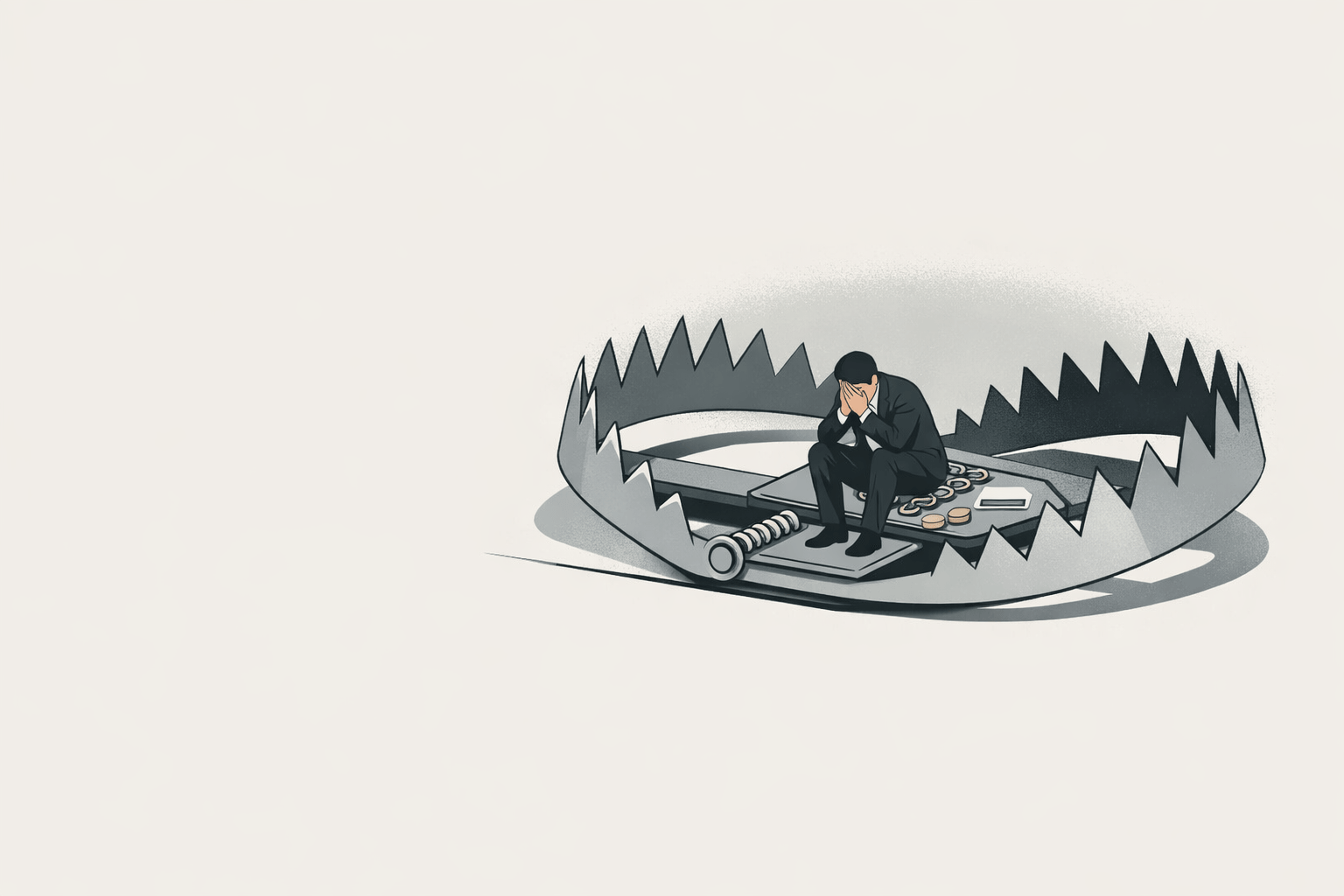
Perangkap Hutang: Punca, Kesan, dan 6 Cara Pintar untuk Membebaskan Diri dari Kitaran Hutang
Hutang adalah sebahagian daripada kehidupan moden. Pinjaman untuk rumah, pinjaman untuk kereta, pinjaman untuk pendidikan — semua ini adalah cara sah untuk memanfaatkan kewangan apabila diurus dengan betul. Tetapi jika hutang melebihi kemampuan untuk membayar, seseorang akan terjerumus ke dalam perangkap hutang yang boleh mengancam kestabilan ekonomi, kesihatan psikologi dan kualiti hidup secara keseluruhan.
Berdasarkan maklumat daripada Jabatan Insolvensi Malaysia, lebih daripada 300,000 orang telah diisytiharkan muflis antara tahun 2010 dan 2019. Ramai dalam kalangan mereka berusia 25 hingga 44 tahun – tempoh yang sebenar berada di puncak produktiviti kerjaya. Ini menunjukkan betapa seriusnya masalah kitaran hutang di negara ini.
Apakah Itu Perangkap Hutang?
Perangkap hutang merujuk kepada situasi di mana seseorang tidak dapat membayar hutangnya, lalu terpaksa meminjam untuk membayar hutang lama, mewujudkan kitaran yang merosakkan.
Dalam istilah mudah: anda meminjam untuk membayar hutang, kemudian meminjam lagi untuk membayar hutang baru — dan kitaran ini berterusan tanpa henti.
Nisbah Khidmat Hutang (DSR) adalah indikator risiko lain yang digunakan oleh bank. Menurut Bank Negara Malaysia, komitmen bulanan anda tidak seharusnya melebihi 60% daripada pendapatan bersih. Apabila DSR anda mula melebihi had ini, anda sudah berada pada risiko tinggi terjerumus ke dalam perangkap hutang.
Punca Utama Terjerumus ke Perangkap Hutang
Memahami punca adalah langkah pertama ke arah penyelesaian. Berikut adalah sebab utama yang menyebabkan orang terperangkap dalam hutang:
- Berbelanja melebihi kemampuan. Tabiat berbelanja secara impulsif, terutama menggunakan kad kredit, boleh dengan mudah membawa kita ke dalam perangkap hutang.
- Kadar faedah yang tinggi. Kebanyakan pinjaman tanpa cagaran dan kad kredit mengenakan antara 15% hingga 18% setahun sebagai faedah. Ini jauh lebih tinggi daripada faedah pinjaman bercagaran.
- Perbelanjaan tidak dirancang. Kecemasan perubatan, kehilangan pekerjaan, atau kemalangan boleh meninggalkan sedikit pilihan kecuali meminjam tanpa merancang cara keluar.
- Kurang pendidikan kewangan. Mereka tidak memahami faedah kompaun, maksud DSR, atau cara membaca terma dalam perjanjian pinjaman.
- Meminjam untuk membayar hutang lama. Ini adalah tanda terbaik bahawa anda berada dalam perangkap hutang.
Tanda Anda Mungkin Berada dalam Perangkap Hutang
|
Tanda |
Huraian |
|
Hidup dari hutang ke hutang |
Makanan, utiliti, atau sewa dibeli secara kredit |
|
Elak panggilan daripada bank |
Tekanan psikologi akibat permintaan bayaran berulang |
|
Tiada dana kecemasan |
Tiada simpanan untuk situasi yang tidak dijangka |
Jika anda mengenal pasti dua atau lebih tanda amaran ini, tindakan perlu diambil sebelum keadaan bertambah buruk.
Kesan Perangkap Hutang pada Kehidupan Anda
Penyelidikan yang diterbitkan dalam Journal of Financial Therapy mendapati tekanan hutang kronik dikaitkan dengan risiko tinggi kebimbangan, kemurungan, dan masalah tidur.
Kerusakan pada rekod kredit anda boleh menyebabkan pinjaman faedah tinggi di masa depan atau kesukaran membeli hartanah, malah boleh menghalang anda daripada mendapatkan tawaran kerja daripada syarikat yang menyemak laporan kredit.
6 Cara untuk Melarikan Diri dari Perangkap Hutang
Hidup tanpa terperangkap dalam hutang memerlukan disiplin, perancangan teliti, dan kadangkala bantuan daripada profesional. Untuk memberikan maklumat terbaik, kami ingin merujuk anda kepada pakar kewangan berdaftar.
Kaedah 1: Catat Semua Hutang Anda
Simpan senarai lengkap semua hutang anda - berapa banyak yang anda hutang, kepada siapa, berapa faedah yang dibayar, berapa banyak yang dibayar setiap bulan. Sehingga anda tahu apa yang anda hadapi, anda tidak tahu cara mengurusnya.
Kaedah 2: Kaedah Avalanche
Bayar minimum untuk semua hutang, tetapi gunakan wang tambahan untuk hutang dengan kadar faedah tertinggi. Kaedah ini terbukti paling berkesan untuk mengurangkan jumlah faedah yang dibayar.
Kaedah 3: Konsolidasi Hutang
Pertimbangkan untuk menyatukan semua hutang ke dalam satu pinjaman dengan kadar faedah yang lebih rendah. Ini memudahkan pengurusan dan berpotensi mengurangkan beban bulanan anda.
Anda boleh mencuba Amanahkredit, sebuah syarikat pembiayaan yang menawarkan pinjaman segera. Dengan proses permohonan mudah dan terma fleksibel, anda boleh mengurangkan hutang anda kepada satu pembayaran bulanan yang lebih mudah ditanggung.
Kaedah 4: Dapatkan Bantuan daripada AKPK
Agensi Kaunseling Kredit dan Pengurusan Hutang (AKPK) — menawarkan perkhidmatan kaunseling kredit percuma kepada pengguna Malaysia. Sementara itu, jika anda berada dalam kesulitan kewangan, anda boleh mempertimbangkan Program Pengurusan Kewangan Bersepadu (PFM) yang ditawarkan oleh AKPK supaya mereka boleh merundingkan pelan bayaran balik dengan bank bagi pihak anda.
Kaedah 5: Tingkatkan Aliran Tunai Anda
Kerja sambilan, kerja separuh masa, atau memanfaatkan kemahiran anda, pengajaran dalam talian, kraftangan, perkhidmatan bebas — apa sahaja yang menambah sedikit wang akan membantu anda membayar hutang lebih cepat.
Kaedah 6: Bekukan Semua Kredit Baru
Jangan gunakan kad kredit anda sama sekali semasa membayar hutang. Simpan kad anda di tempat yang sukar dicapai, atau hubungi bank untuk menurunkan had kredit anda.
Cara Mengelakkan Perangkap Lagi
Setelah anda berjaya keluar daripada perangkap hutang, lindungi diri anda:
- Bina simpanan tiga hingga enam bulan sebelum mempertimbangkan pinjaman lain.
- Pastikan DSR anda di bawah 40% — iaitu di bawah had bank, supaya anda mempunyai ruang untuk bernafas.
- Jangan lupa untuk menyemak status pinjaman anda secara berkala pada laporan kredit melalui CCRIS (Bank Negara Malaysia) atau CTOS sebagai peringatan berguna.
- Elakkan pinjaman tanpa cagaran untuk tujuan penggunaan harian seperti percutian dan barang mewah.
Ringkasan: Langkah Pertama ke Arah Kebebasan Kewangan
Perangkap hutang bukan tanda kegagalan peribadi — ia berpunca daripada gabungan keadaan, keputusan, dan kadangkala, nasib buruk. Yang penting ialah tindakan selepas mengenal pasti keadaan tersebut.
Mulakan dengan satu langkah: tulis semua hutang anda hari ini. Kemudian, pilih satu kaedah daripada senarai itu dan patuhi. Anda boleh bebas — hanya memerlukan kaedah yang betul dan sedikit tekad.
Jika anda mendapati sukar untuk bermula, pertimbangkan untuk menghubungi AKPK atau penasihat kewangan berdaftar. Ingat bahawa setiap langkah kecil penting dalam perjalanan menuju kehidupan tanpa hutang!